
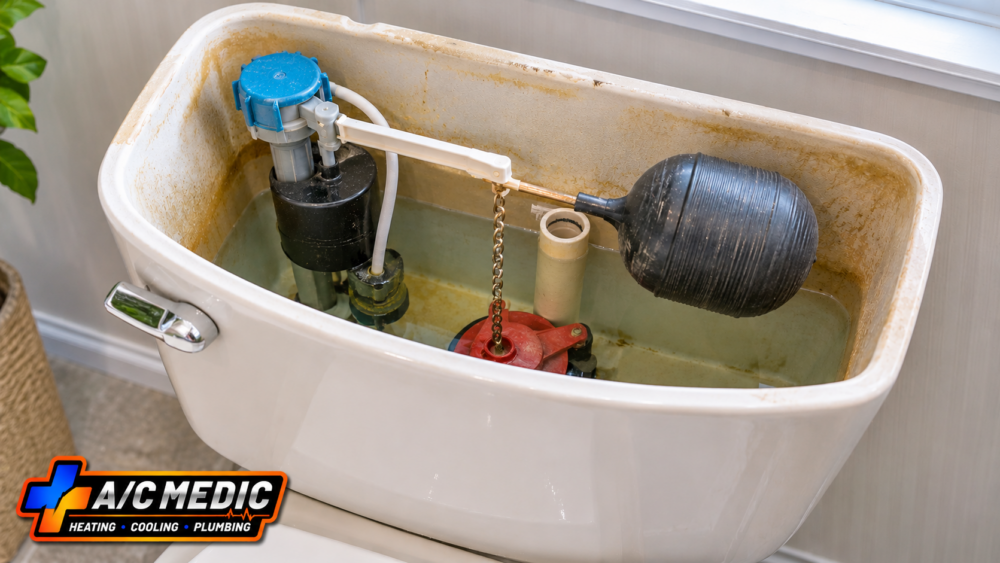
Quick Answer: A toilet keeps running when water escapes from the tank into the bowl, which makes the fill valve cycle on over and over. The usual causes are a worn flapper, a float set too high, a fill valve that will not shut off, or a chain that is the wrong length. A 10-minute dye test tells you which one you have.
If you are wondering why your toilet keeps running, the short answer is that water is escaping from the tank somewhere it should not. The tank senses the level dropping and refills. That cycle repeats, sometimes for months, and your water bill climbs the whole time.
The good news is that the cause sits in a short list of four parts. You can narrow it down in about ten minutes without any tools.
Why Does My Toilet Keep Running After I Flush?
After a flush, the flapper should drop back down and seal the opening at the bottom of the tank. Water then refills to a set level and stops.
If the toilet keeps running after that, one of these things went wrong:
- The flapper did not seal, so water keeps draining into the bowl
- The chain tangled or sits too tight, which holds the flapper slightly open
- The float sits too high, so water pours into the overflow tube
- The fill valve never shuts off, so water keeps entering the tank
Lift the tank lid and watch a flush cycle. Where the water goes tells you most of what you need to know.
The 10-Minute Test That Finds the Problem
The EPA recommends a simple dye test that costs nothing. Put a few drops of food coloring in the tank and wait 10 minutes without flushing. If color shows up in the bowl, water is leaking past the flapper. The full method is in EPA WaterSense guidance on finding household leaks.
Flush right away afterward so the dye does not stain the tank.
This one test splits the problem in half. Color in the bowl points to the flapper or the flush valve seal. No color, but the toilet still runs, points to the fill valve or the float.
The Four Parts That Cause a Running Toilet
The flapper. This rubber seal sits at the bottom of the tank and lifts when you flush. Rubber decays, warps, and collects mineral buildup. The EPA notes that a worn flapper can make a toilet flush on its own or silently leak thousands of gallons a year, and recommends replacing it at least every five years.
The fill valve. This controls water entering the tank after a flush. Grit and sediment stop it from closing all the way, so it keeps trickling water in.
The float. The float tells the fill valve when to stop. Set too high, or waterlogged, and water spills into the overflow tube instead of stopping. Look at the water level. It should sit about an inch below the top of the overflow tube.
The chain. A chain that is too short or tangled holds the flapper open a crack. A chain that is too long slips under the flapper and blocks the seal. You want a small amount of slack, no more.
Why Does My Toilet Run for a Few Seconds and Then Stop?
Plumbers call this a phantom flush. The toilet refills on its own even though nobody touched it.
That pattern almost always means a slow flapper leak. Water seeps out of the tank gradually, the level drops enough to trigger the fill valve, and the toilet tops itself up. Then it goes quiet until it happens again.
A phantom flush wastes less water per minute than a constant run. It still adds up, and it still points to a flapper that needs replacing.
How Much Water Does a Running Toilet Waste?
More than most people expect. EPA WaterSense reports that nine percent of homes have leaks wasting 50 gallons or more every day, and the average household loses more than 9,300 gallons a year to leaks that are easy to fix. Correcting them trims about 10 percent off a water bill. EPA’s Fix a Leak Week fact sheet puts a steadily running toilet at 200 gallons a day or more on its own.
Here is a quick way to check whether something else is leaking too. Look at your winter water use, in January or February when nobody waters a lawn. If a family of four goes over 12,000 gallons in a month, you likely have more than a toilet problem. Our leak detection service finds the ones you cannot see.
How to Fix a Running Toilet Yourself
Most running toilets come down to a flapper, and swapping one takes about 15 minutes.
- Shut off the water at the valve behind the toilet
- Flush to empty the tank
- Unclip the old flapper from the overflow tube and unhook the chain
- Clip the new flapper in place and attach the chain with a little slack
- Turn the water back on and test a few flushes
Take the old flapper to the hardware store, or photograph it first. Flappers come in different widths, and some have a foam float attached that you need to match.
If the flapper seat feels rough or crusty when you run a finger over it, clean it before fitting the new part. A new flapper will not seal against a scaled seat.
When to Call a Plumber Instead
Some running toilets are not a parts problem, and replacing a flapper four times will not fix them.
Call a plumber when any of these apply:
- You replaced the flapper and the toilet still runs
- Water pools around the base of the toilet, which usually means a failed wax ring
- The tank or bowl has a crack
- The same toilet develops the same fault every few months
- Several fixtures in the house run or drip, which can point to water pressure that is too high
Age matters here too. On an older toilet, replacing parts one at a time often costs more over a couple of years than replacing the fixture. A newer high-efficiency model uses far less water per flush, so the savings keep going after the repair is done. Our toilet repair and installation team will tell you which way the math falls on your toilet rather than defaulting to a replacement.
Get the Running Water Stopped
A/C Medic has served Durham and the surrounding Triangle since 2017, and we hold a North Carolina plumbing contractor license alongside our heating and cooling work.
If your toilet keeps running after you have tried the obvious fixes, we will find the actual cause instead of guessing at parts. We also handle the rest of the house through our plumbing services.
Contact A/C Medic to schedule a plumber.
